
Media industry, at one end, is very interesting and glamorous and on the other end, its very demanding. You will get challenging issues to face daily – ranging from politics, civic, govt, cultural, religious, sports to entertainment. Media pros work 24X7, with a high degree of patience, ethics and confidence. They need to put their info forward very effectively and influentially. They keeps themselves updated all the time. So, why has trust in news media dropped so much in the past few years – much more than it’s declined in western countries?
How much of the decline in media trust is actually about the media’s actions, versus the narratives that get spun about them? Ex: Right wing conservative politicians criticizing media in what we argue is an attempt to fundamentally undermine its legitimacy. Are media study / courses making you really proficient in skills and prepare you to handle the unexpected pressure of the evolving industry and untangling question of media distrust causality through creative mixes of journalism history, natural language processing, and field experiments? In India, there are many opportunities available for those interested and want to make their career in media and journalism.
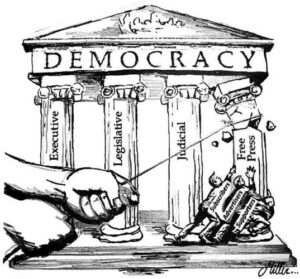
For example, India Today Media Institute, started by IT Group, located in Delhi NCR offers media education courses that cater the needs of industry. Media training course of ITMI offers practical orientation to various careers through its dynamic approach to courses. It claims to provide opportunities to understand the media landscape in stimulative environments through in-class training and then move them out to experience some real environments through research work, internship and campus placements. Though journalism in reality rests heavily on rhetorical means of policing its borders – talking about things like its role as fourth estate and its importance in defending democracy for commoners.
 To develop the strategical and analytical attitude of media students, faculty are mostly comprised of specialists from popular media. They associate with various reputed media houses like TV Today Network, Zee, ABP, NDTV, CNN, BBS, Republic, INX, etc. The faculty needs to have enriched experience in research and development in media and journalism.
Asking people how much they trust the media requires a shared definition of what the media is, and we don’t have that anymore. Meaning someone who watches Aaj Tak all day would likely say, I don’t trust the media – but they clearly trust Aaj Tak, right? Just asking about the media is asking people to think of it as a sort of nebulous force in the universe, because the media is so wildly varied, unless its state controlled via license raj jugaad.
Subscribers (viewers, readers, followers) are not forming their levels of trust in response to individual news articles or debate shows or newspapers or journalists or whatever, based on, like, really cognitively effortful processing of the information that a media publishes. It’s more emotional. It’s more intuitive. It’s like “Is this information making me feel good or not”?
Countries of Northern Europe and Germany make up democratic corporatism in media, and newspaper circulation there tends to be very, very high. You have a very rigorously professionalized journalism, embodied in things like Sweden’s uber-powerful press council. Elsewhere it’s much more capitalist. It’s professionalized as well, but with sort of a market-driven business structure to it. In digital media age, politicians have many more direct avenues to actually communicate with constituents. Internet and apps has fundamentally upended business models, allowed increasing media concentration, particularly in the hands of private equity, crypto pros, debt bonds and hedge funds who now have huge stakes in all large media corporate houses including digital and AI timelines.
Student of media courses can also join film and TV production house, digital channel, AI startup, publishing house, NGO, radio channel or any corporate house as PR / influence personnel, communication strategist, etc. Journalism obviously doesn’t have degree requirements worldwide — I’m proof of that. I worked as a journalist for few years, and I have no journalism degree. There’s no licensing, there’s no testing. Go ahead, start a tube or blog or dare to hook-up here!