

Citrus trees flourish in ground with an acidity level between 6.5 and 7.5 pH. If soil pH falls outside the range, modify by adding sulfur to lower pH or lime to increase it. Lemon trees prefer a sandy loam, offering a balanced blend of sand, silt, and clay. Maintaining soil health with composting and cover cropping enhances nutrients for Lemon trees. Water conservation techniques like mulching and drip irrigation will reduce water usage, and promote efficient growth.
If soil holds too much water, roots can suffocate and decay, leading to poor tree health or even death. To assess your soil’s drainage, dig a 12 inches deep hole, fill it with water, and observe the drainage time. Efficiently draining soil should absorb the water within a few hours. The ideal soil mix contains 60% sand for drainage, 10% clay to retain some moisture, and 30% silt to hold nutrients, with a light and fluffy texture full of organic matter like compost or mulch.
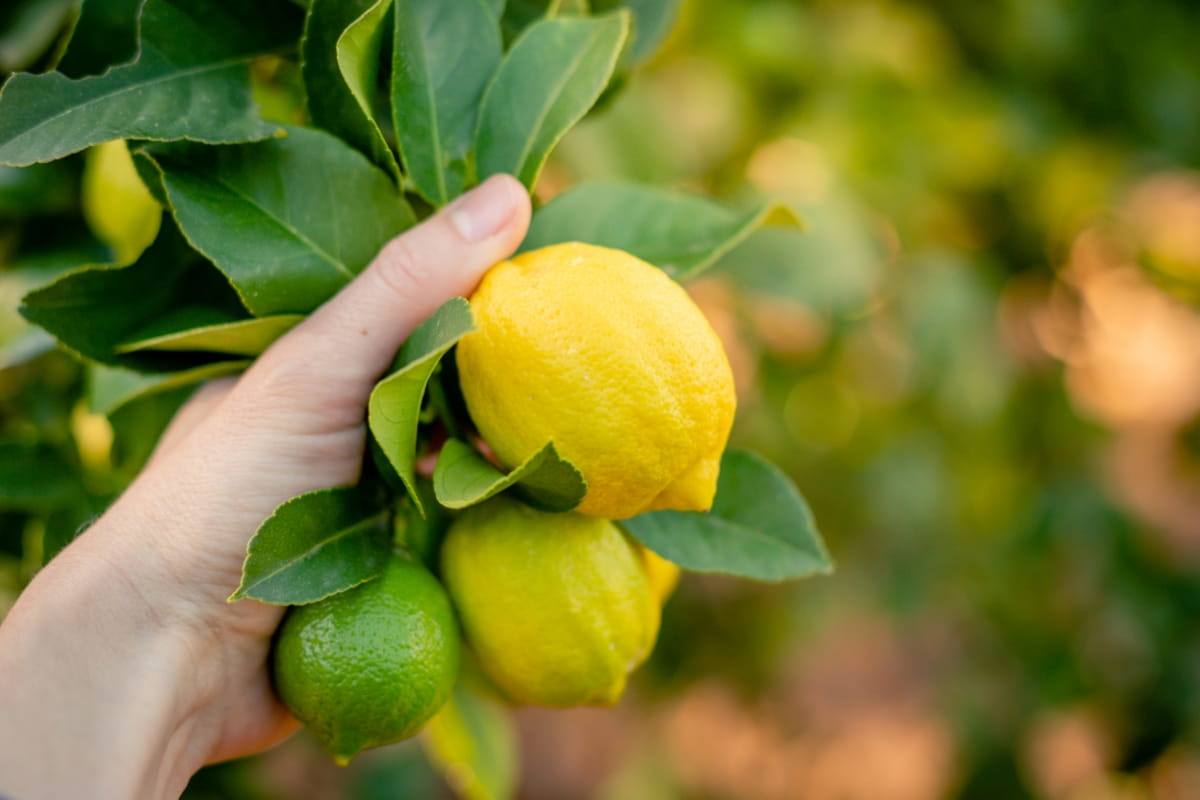
Lemon farmers should focus on bio-diversity by creating balanced ecosystems that supports pollinators and beneficial organisms essential for thriving orchards. Integrate farming practices like crop rotation, inter-cropping, and natural pest control methods can enhance health of trees while minimizing environmental impact, promote natural pest control and reduce reliance on chemical inputs. Nourish bio-diverse environments where beneficial insects can thrive, helping to keep harmful pests away. Bone meal can address phosphorus deficiencies, and potash can supply potassium. This encourages use of organic fertilizers and compost to improve soil health and fertility naturally.
Depending on factors like land cost, location, scale of the operation, infra, labor costs, and initial investments in equipment and inputs, Lemon farming could cost anywhere from ₹50,000 to ₹100,000 per acre and profit from an orchard per acre could be around ₹50,000 per year.